The great photo excursions!

The great photo excursions!
Ready... Set... Click

Friday, 6 October 2017


 Porto. Portugal


Sometimes shit happens. So I guess it should be no surprise that eventually it would.

We arrived in Porto, Portugal on our Iberian flight from Granada and hailed a cab to the apartment we rented on the Ribiera. We arrived to find that they did not have our reservation. Several frantic calls later we discovered that our confirmed Expedia reservation had somehow been cancelled and Expedia had failed to notify us. With the help of Bruno, the young man working at the apartments, we were able to secure a place downtown for the first night then he could get us into another of their apartments the second night and into the apartment we had originally rented on the Ribiera for the last two. Not ideal, but at least we had a place to stay and we would see several areas of the city as well.

Porto dates back to 300 BC. It was at times under Roman rule, and for a short time Moorish. In 1387 the marriage of John I of Portugal and Phillipa of Lancaster formed the longest standing alliance between Portugal and England.

In the 14th and 15ht century Porto’s shipyards played a big part in the development of Portugese ship building. The evidence is still there, on Villa de Gaia side of the river.

Henry the Navigator, son of John and Isabel, embarked on the conquest of Africa and Morrocco and began the Portuguese Age of Discovery, ultimately building a strong and wide spread Portuguese empire. Portuguese remained a monarchy until 1910 when it won its independence and became a republic.

The Douro Valley was already producing wine in the 13th century and continues to be a significant export

today, with port wine being their flagship.

We spent four days in Porto and were able to cover a lot of ground despite our daily moves.

1.       Ribiera promenade with restaurants, shops

Wander down the steep and winding alleyways and stairs from upper Porto down to the Ribiera. Here a wide promenade follows alongside the River Douro, dotted with restaurants, cafes, shops and boutique hotels.
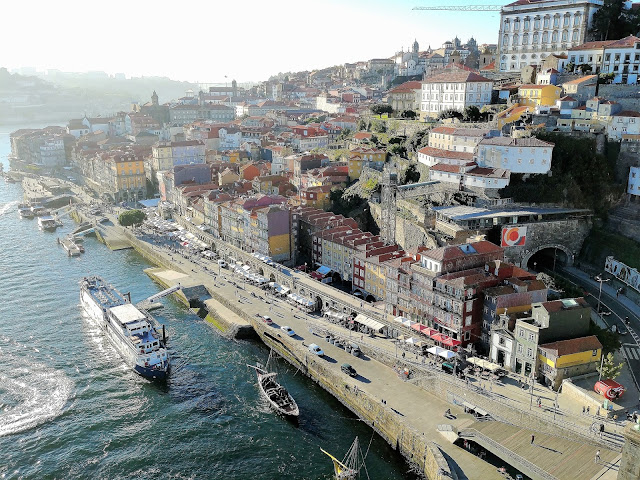


Six bridges span the river between Porto and Villa Nova de Gaia on the other side. Long boats traverse the river packed with tourists or port wine barrels.


2.       Six bridges and boat tour.


Six bridges span the river as it curves through Porto and Villa Nova de Gaia. The most notable is the Ponte Luis I bridge, designed by Gustave Eiffel (builder of the Eiffel Tower). It has a double deck, the upper being for buses and the lower for cars. Pedestrians can walk across either one with magnificent panoramic views of both sides of the river.

To cross the upper deck of the bridge, first you have to get up to that level. You can access it from central Porto, or take the funicular up from the lower level and then walk across.


Down by the river`s edge on the Gaia side of the river you will see a host of long boats lined up along the shore. Most offer tours that cruise up and down the river passing under the six brides and providing history of each. A great way to spend a sunny afternoon.


3.       Port Wine Tasting and Cellar Tour

Porto, or more accurately, Villa Nova de Gaia is where Port Wine is cellared and aged and shipped all over the world. There are over 50 port wine lodges and most offer tasting and cellar tours where you can learn about pot and how it is produced. Some of the best are Calem which is very near the bridge and produced excellent ports. You might also want to try Sandeman, Taylor, or Offley.


4.       Hop-on Bus to the Atlantic ocean and beaches


Every city you travel to has hop-on hop-off bus tours and Porto is no exception. You can take the red line, the blue line, the blue bus, the yellow bus; it really doesn`t matter. It can be a great way to get around the city and see a lot of the key attractions at your own pace.

We decided to take the bus to visit the Atlantic shore. Here the rugged Atlantic crashes against a rocky shore. The sand is the color of golden brown sugar but quite course and grainy, not ideal for walking barefoot on the beach. The strength of the waves grinds any beach glass to tiny green shards in the sand and polishes beautiful marble-like pebbles to a shine.
The bus continues on its loop down to the Riberia and across the bridge to Villa Nova de Gaia.   A great way to see the city.


5.       No. 1 Tram historic route and Lighthouses where River meets Ocean


Another way to sight see around Porto is the historic No. 1 tram that rumbles along an aged track through old downtown and along the riverside. The tram has been running since 1895 and retains its vintage look and feel, ending at the point where the Douro River meets the Atlantic. Here long sturdy breakwaters break the powerful and dangerous currents where the two meet, a dangerous spot where many seamen have lost their lives.


We decided to take this little trek on Tuesday, which happened to be a very foggy morning. The fog hung low over the water creating a misty blanket. Each breakwater was marked with a lighthouse, barely discernible in the fog. Thundering waves crashed against the massive concrete walls, swelling and occasionally breaking over the walls and spilling onto the walls where people walked.


Across the street sits a beautiful old fort, one of the best preserved we saw in Portugal. It is owned by the Department of Defense and still used by them but visitors are allowed to wander through much of it.


The sun finally burned of the fog and the afternoon was hot and sunny, good for a long walk back along the river, with the golden autumn leaves framing the graceful bridges and the brilliant blue water.


6.       Clerigos Church – climb the tower- 360 view

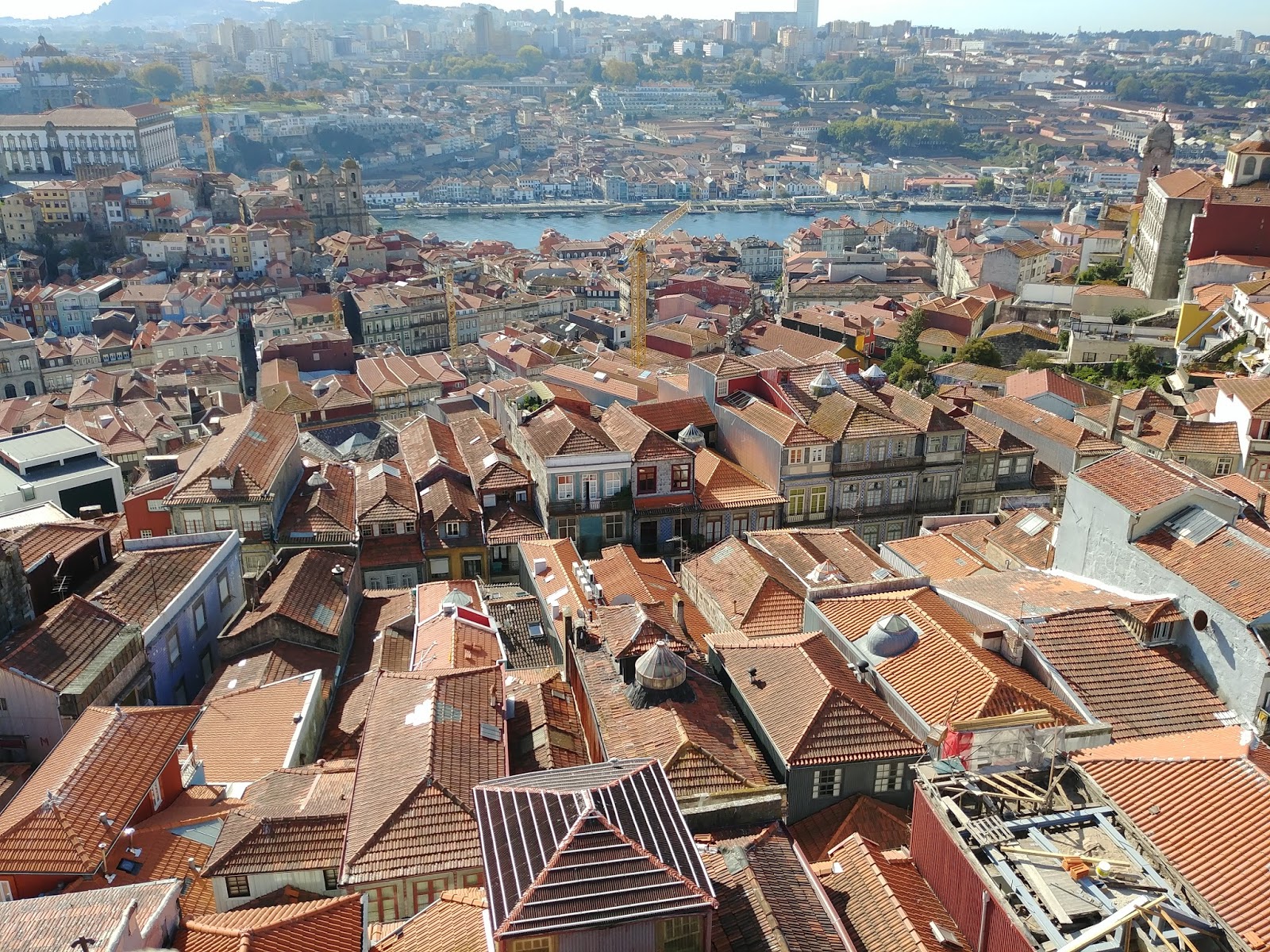
Clerigos Church, or Church of the Clergymen, is a Baroque style church with a tall bell tower, built in the 1700`s. The tower is 75 metres high with 240 steps to the top of its 6 floors. It is the jewel in the crown of Porto. Visitors can climb to the top and take in spectacular views across the city, the river and to the ocean.


The church itself is still in regular use and while it is beautiful it is not as opulent as many.


7.       Sao Bento Train Station with blue tiled historic mosiacs .

Everywhere in Porto, and in Portugal, you will see beautiful blue- patterned tiles adorning churches, homes, storefronts. Most depict designs and drawings or scenes.

Probably the most impressive are inside Porto`s Sao Bento train station downtown. Here the beautiful mosaic tiles depict the history of transportation from ox carts to the first train.


You will also see the blue tiles on many of the churches like the Church of St. Anthony just across the street from the station as well as most of the other churches in the city.


8.       Cathedral Se, Cathedral of the Assumption of Our Lady.

This Cathedral was built between the 11th and 13th centuries with additional alterations in the 1700’s. It is one of the oldest and most important monuments in Porto.

As is the norm here, the blue tiled panels are evident, depicting important events or honoring patron saints.


9.       Food and Wine- port, sangria, vino verdhe, pastries, francesinha sandwich, seafood


Seafood is always a specialty since the local fishermen bring in their catches daily, or you can sample some of the local specialties. One is the francesinha, a Portuguese sandwich which is their go-to snack. It consists of bread, ham, sausage, meat, melted cheese and some type of thick gravy made with tomato and beer, and served with fries and usually beer.
The francesinha sandwich, a Portuguese traditional food., and seafood - another favorite.

You can get sangria, much like Spain, but you can also get Sangria made with port wine.

Of course port wine is popular for after dinner, especially with chocolate and in the summer Vino Verdhe, a young crisp white wine that is not fully fermented. 

Whether you are in the Centro area or down along the Ribiera, there are plenty of restaurants to try out.

10.   Sunset over River Dourro, bridges and the Ribierra

As the sun begins to set the bridges are lit with golden colors and the sky begins to glow with shades of pink and purple, People gather on the higher spots overlooking Porto and Gaia. It is the perfect time to have a glass of wine on an outdoor patio or stroll across the Ponte de Luis I bridge as the setting sun lights up the colored houses along the river.


11.   City Hall Square and Imperial McDonalds

In the downtown area of Porto you can find a long, narrow square. At one end is a statue of King Pedro IV, hero of the 1832 Civil War. At the other end is the magnificent City Hall or Camara Municipal.

It also is the site of the Imperial McDonalds, the fanciest in Europe. Formerly the Imperial Café, it has frescoed panels on the walls and glistening chandeliers throughout. And, it still provides am Egg McMuffin for a quick and inexpensive breakfast.


12.   Bruno!!!!
Even though the sites may be unforgettable and awe-inspiring, there is nothing that parallels exceptional service and a genuine helping hand when someone, especially a young person, puts themselves out of their way to help out when there is no real benefit to them to do so. And that`s what Bruno did… Obrigada Bruno.


Four days in Porto flew by. I wish we had had a little more time to really enjoy it, but we are on to Lisbon now for our last stop. Come With Me...

More Porto favorites..


Tuesday, 3 October 2017


Granada: 10 Top Things to see in Granada


Granada sits in the southern part of Spain. Like Barcelona it has a past that included many different cultures including Roman, Visigoth, Islamic or Arabic and Christian. But, Granada has a stronger Arabic influence in its culture and architecture. Everywhere there is a blend of Arabian and Spanish or Christian. This blend in architecture is called Murjista(?).

Granada is a beautiful city, small by comparison to Barcelona or Madrid. It is very clean and friendly and casually balances new and modern with the old. There are distinct areas displaying the varied history of the city: The Arab Quarter nor Albayzin, the Gypsy Quarter or Sacromonte, the old historic Christian centre and the Jewish Quarter.

We had four days in Granada to explore all it has to offer. Here is my list of the top 12 things to see or do if you visit Granada:

1.       The Alhambra, of course.


The Fountain of the Lions in the Palace Nazarones.


The Alhambra is an Arab citadel (city inside walls) that sits high above the town. Its red walls are still intact as are many of its buildings. While it was an Arab fortress, the Christians occupied it after they defeated the Arabs and there are parts that reflect that as well, like King Charles V’s magnificent Palace. IF you go to the Alhambra it is a good idea to take a tour so that you can learn about the history of the many palaces, towers, and inner workings of the citadel.

And, make sure to get your tickets to the Palace Nazarios – separate from your main admission.


The Alhambra used to be white with no trees around. It was a defensive fortress and they had to be able to see anyone approaching. But, over time trees were planted to stop the erosion of the mountain.


Because there are watch towers, palaces and multiple levels there are many winding stairways as you wander throughout the complex.

Panoramic views of the city and the valley are spread out below.


2.       The Albayzin or Arab Quarter.

It is a steep climb up from central Granada along old, narrow, cobblestone passages and stairways. Around every corner is a surprise – a church (which was likely formerly a mosque), a plaza, a wall with its Islamic keyhole windows, or little restaurants or cafes or shops. You see evidence of the old Aljides or wells that brought water down into the town centuries ago. And as you wander you will see glimpses of towering Alhambra across the river.


3.       The Alceceira or old Souk market.


Colorful cotton harem pants, flowing skirts and printed blankets hang of the front of little stalls along a crowded passageway. Inside beautiful and colorful mosaic lights and lanterns drape from the ceiling. And in between every manner of handicraft or souvenir spills off of every surface. Of course there are the usual t-shirts, keychains, and knick knacks but here you see the exotic touches of Morocco as well. The narrow alley winds like a maze through a couple of blocks behind the popular Plaza Nuevo.


4.       The Hammam or Arab Baths.

(No photos allowed. This is from the website of the Hammam)


Inside of the Alhambra you will see the remains of the Roman Baths, which were condemned by the succession of Catholic monarchs as pagan and sinful. While these are now only ruins, in Granada itself you will find a number of Hammams or Arab Baths where you can indulge in the ancient practises of the Baths. One of the best is the Hamman del Andalus. As you enter, you are immediately transported back in time to the Arabian baths. Soft Arabian music places and exotic fragrances waft through the air. You make your way through beautifully arched and tiled passageways, silent and peaceful, to candlelit pools on the Water Journey.


Warm… Hot… Cold… Steam.  Repeat.

Repeat gain, as needed.


First you slip into the warm pool, easily immersing yourself into its gentle, tranquil waters. The quiet, the scents, the lulling music release all stress and strain. Then you move to the hot pool and slower slip into its embrace further melting away tension and tightness. Next step… immerse yourself totally into the cold pools.. not so easy, but ultimately invigorating and refreshing. Then on to a 5 minute spell in the steam room. And repeat this cycle for the precious 90 minutes allotted.


As your body releases any resistance and your muscles melt, you are beckoned into the massage chambers, Here a large round marble slab fills the centre of the room. The stone is hot. You lie, back flat on the marble floor allowing the heat to seep into your pores. I sweat this is the ultimate in relaxation, it is near impossible to pick yourself up from the floor. But you must. You are ushered into a semi-private massage area where well-trained hands massage warm, fragrant oils into your skin and gently rub and massage neck. Shoulders, back, arms, hands, feet… until every fibre has surrendered.


I don’t know if we have such an experience in Vancouver but I surely going to search for one.


5.       Sacromonte and the Gypsy Flamenco shows.


If you follow the winding paths through the Albayzin to the end of the old city walls you will come to Sacromonte. It is on the other side of the wall, outside the city. Here the gypsies live in very basic rudimentary living conditions, little stucco houses built into the side of the hills.
When they first arrived here they discovered how easy soft the soil was and how easy it was to dig into. So they built little caves and made these into their homes. It is dusty and dirty, even the cacti are desolate. But their spirit remains undaunted.

Throughout the quarter there are several Flamenco Shows which tourists clamour to see. Visitors duck into the long, narrow structures, seated on simple wooden chairs and benches. The music is rhythmic and contagious. The singer chants plaintively, more than sings. Gyspy women in their flowing or ruffled dresses of red and black, with heavily-lined and dramatic eyes, twirl and spin; their heels hammering on the wooden floors. The men, shirts open at the neck under tailored suit jackets whirl and stomp. Stomp and whirl in a frenzy. Spinning and clapping. It is a festival. A party, a celebration and we are there to share in it.


6.       Saint Nicholas Square Mirador (lookout).

Across the valley from the Alhambra, in the Albayzin District sits the church of St. Nicholas, the highest point in the Albayzin. From here you have a direct view of the Alhambra. The evening is the best time to go, either to watch the sunset off after dark to see the Alhambra lit up against the dark night sky.


7.       History Walking Tour.


There is so much history in Granada and it is captured in time in the many monuments and archeologically preserved buildings throughout the town. There are many walking tours available, some free and some for a nominal fee. You will discover the towering and intricately beautiful Cathedral, the fourth largest in the world and dating back to 1561, over top of the city’s main mosque after the Christian takeover of the city. You will visit a Corral (Corral del Carbon), constructed in 1336 it was once a guesthouse and later a grain exchange and coal yard.

You will pass many a square and a church from Plaza Santa Ana with its lovely blue tile steeple that attracts many a wedding, to Plaza Isabella with it towering statue of Christopher Columbus and Queen Isabella. You will stop at the popular Plaza Nuevo dotted with open-air cafes and restaurants. And all along you learn about the fascinating and multi-facetted history of this city.


8.       Free Tapas.

Granada is famous for its free tapas. Here you can order a glass of wine, a beer or another drink like Sangria and you will receive a free tapas or appetizer. The history goes, because the weather was hot and there were a lot of cattle or camels or whatever, there were also a lot of flies which would find their way into people’s drinks. To deter the flies, bartenders began topping the glass with a slice of b read. This seemed rather boring so they began adding a snack on top of the bread and tapas was born. But Granada is the only area that gives away free tapas with a drink. In some places these are skewered on toothpicks which were saved and tallied to determine the bill at the end of the night.


Now, in most places you can order a drink and be offered a free tapas.


One of the best is our favorite, B&B’s just near our hotel. They have a tapas menu and you can choose what you want. We loved the mini burgers and the steamed veggies and chicken, free with our glass of wine.  Can’t beat that.


9.       The Teterias or Tea Houses of Granada

Just back of the central Plaza Nueva you can find a narrow little street or passageway that winds uphill. It is flanked on both sides by little Arabian markets – bright colored fabrics, lights, incense, spices. You step through curtained doorways into little shops filled with knickknacks and souvenirs.


But that is not the best part of Calle Calderia Nueva. Here you will find the Teterias or Arab tearooms. This is where the young people and the hippies come to hang out, Granada is a big University town. It informal. These delightful and exotic little places are Kasbah influenced and offer all manner of fruit infused teas and delicious pastries as well as Arab influenced foods like couscous, falafels, shwarma.


We chose Alfaguera. Here you can sit crosslegged on colorful patterned cushions on little benches on the floor, or on cushioned benches at a regular table (for those of us who may not be able to get back up off the floor!) They have mouthwatering crepes stuffed with chicken, vegeatbles or fruit. I chose peaches, hazelnut and chocolate – yum! And a little hazelnut and honey roll, the filo pastry paper-thin and delicate. Again – yum!


They also have hookahs and water pipes and you can go into another room and smoke fruit infused tobaccos. We pretended- but I am not that cool….


10.   Shopping – of course


Granada has a very cosmopolitan area as well. The more modern Centro area has several good shopping streets. Calle Acera del Darro is one such street, with beautiful hanging baskets of red geraniums lining the centre boulevards and shiny glass storefronts beckoning. Window shoppers can browse storefronts offering silver jewellery (almost always 50% off), many shoe stores and clothing stores, farmacias, perfumeries…  Beautiful colorful gowns grace the windows making you wonder (maybe enviously) where they could possible go to justify wearing them.


Nearby, the multi-level department store (El Cortes Ingles) is very reminiscent of The Bay with floors of clothing, shoes, accessories, and even a supermarket on the lower level.


We loved Granada and will miss it as we move on to Portugal.   Come With Me....